Forterra Put 100 Autonomous ATVs in Ukraine. Soldiers Are Mostly Driving Them.
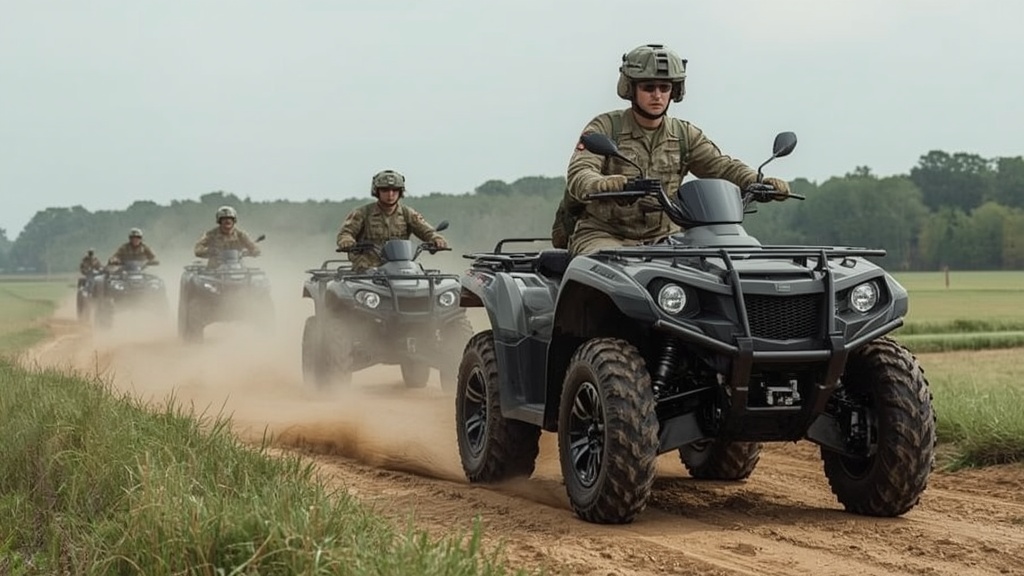
Forterra has deployed more than 100 self-driving ATVs to Ukrainian combat zones since October 2025. The company calls it the largest autonomous ground vehicle deployment in combat by any U.S. defense tech company. The vehicles, called Lancer, have logged 2,500 miles across 1,100 missions. They carried 777,440 pounds of cargo and completed 52 casualty evacuations.
The "autonomous" label requires a footnote. Ukrainian soldiers are primarily teleoperating the vehicles rather than running them in fully autonomous mode.
What Lancer Actually Is
The Lancer is a Polaris ATV with a custom sensor and compute stack. Forterra added a Starlink antenna for the Ukraine deployment. The vehicles run on gas and carry up to 750 kilograms.
That payload figure is notable. Ukrainian-built UGVs are battery-powered and cap out at 250 kilograms. For logistics work in active combat zones, the range and payload difference is significant.
Forterra has been building autonomous vehicle technology for 20 years. It has raised more than $500 million from XYZ Venture Capital and Moore Strategic Partners.
The Autonomy Gap
The deployment illustrates where autonomous ground vehicle technology actually stands. The vehicles complete missions. But real combat is not a controlled test environment.
Forterra has identified the key gap: the vehicles cannot identify unexpected enemy forces and react appropriately in real time. That is why soldiers are driving them instead of sending them ahead on their own.
Forterra is working on combining classical self-driving algorithms with generative AI software. The goal is generalized environmental reaction, meaning the vehicle handles situations it was not explicitly programmed for. That capability does not exist yet at the level required for unsupervised combat operation.
The Broader Field
Scout AI recently raised $100 million to train foundation models for military platforms, including UGVs. Field AI and Overland AI are also in trials with the U.S. military.
The pattern across these companies is consistent. Hardware capable enough for logistics. Intelligence layer still unsolved.
What the Numbers Mean
1,100 missions and 52 casualty evacuations are real operational metrics, not demo footage. The Forterra deployment demonstrates that autonomous ground vehicles can operate in high-stakes environments at scale. It also makes clear that "autonomous" currently means supervised operation with a human at the controls.
Closing the gap between teleoperated logistics and genuinely independent operation in unpredictable terrain is the next problem. Nobody has solved it.
Source: Techcrunch