Meta's Data Center Robots Can Swap Cables But Can't Read Indicator Lights
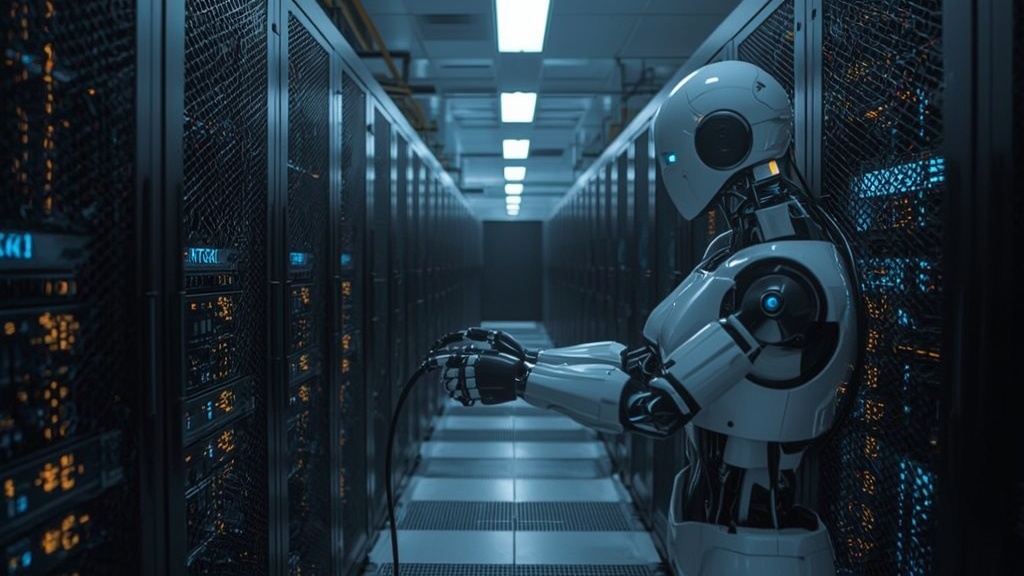
Meta is running robots in its data centers. Not for a demo. For server maintenance.
The company is testing machines from Watney Robotics, Kinova, and ABB across facilities in Iowa, Ohio, and Virginia. Tasks include cable swapping, power cycling, part reseating, and inventory tracking. Meta estimates a cable-swapping robot could replace up to 80 percent of some technicians' workloads.
What Each Robot Actually Does
Watney dual-armed robots have been running cabling work at Meta's Altoona, Iowa data center since June 2025. Watney launched in 2023, originally targeting laundry-folding and janitorial work, before pivoting to data centers in early 2025.
Meta is evaluating a Kinova Gen3 arm for power cycling and cutting electricity to servers. A simpler finger-like robot handles power buttons on Mac Minis and similar devices for remote restarts.
ABB four-wheeled robots with scissor-lift risers and six-axis arms operate at Meta's New Albany, Ohio Prometheus campus, reseating parts. A tugger robot moves heavy server racks around. A wheeled barcode-reading robot tracks inventory across facilities in Iowa and Virginia.
The inventory robot has a specific limitation: it detects only grayscale. It cannot distinguish a green indicator light from a red one.
What They Cannot Do
Meta has internally acknowledged that current robots are not equipped for the cabling work required for Nvidia GB300 supercomputer installations. That is the demanding end of the spectrum. Present capabilities stop well short of it.
Earlier industry trials provide useful context. Previous robot deployments ended with machines crushing servers while attempting routine tasks.
Meta Is Not Alone
Google and Microsoft announced separate data center robot investments in 2024. Amazon discussed using robots for parts recycling in 2025. Microsoft is actively pursuing robots for economically valuable tasks, including replacing faulty server racks.
Analog Devices oversees what it calls "physical intelligence" work and reports growing customer demand for humanoid robots in data centers. The cited advantages: humanoids can operate at higher temperatures and in the dark. Exclaim Robotics is separately developing prototypes for replacing broken parts and resetting cables.
The Numbers in Context
The 80 percent workload replacement figure comes from Meta. It applies to specific technician tasks, not overall headcount. The robots operating today handle discrete, repeatable operations with defined physical parameters.
GB300 cabling remains out of reach. The inventory robot cannot read two of the most important colors in a server room. The industry has progressed from robots that crushed servers to robots that can press power buttons without incident.
That is real progress. The timeline is just longer than press releases imply.
Source: Arstechnica